
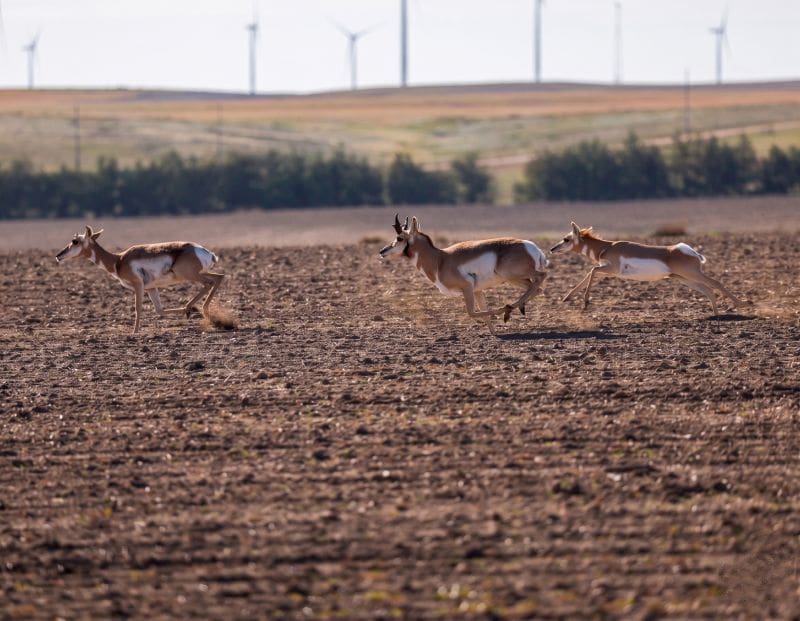
TUO digital marketing specialist Trey Douglas breaks down regional tactics and gear requirements for hunting the American pronghorn
The American pronghorn is native to North America’s western and central grasslands. Ranging from southern Canada to northern Mexico, and while they are often erroneously called an antelope, the pronghorn is unique and closely related to Africa’s giraffes and okapis.
Considered the fastest land mammal in the Western Hemisphere, the pronghorn can reach astonishing speeds with the capability to sprint at 60 mph. This remarkable characteristic is shared with other specialized adaptations including a massive heart and enlarged lungs, all of which evolved millions of years ago so pronghorn could outrun the now-extinct American cheetah. While these Ice Age predators may be gone, the pronghorn remains where it always has been and no modern North American predator can keep up with a healthy adult pronghorn in a straight footrace.
Sometimes referred to as “speed goat” by hunters, the pronghorn’s distinctive pronged, black horn made naming this prairie dweller a no-brainer. Besides the uncanny ability to outrun everything, pronghorn also possesses remarkable vision with a 360-degree field of view that can spot movement up to four miles away. When it’s time to flee their distinctive white rump patch flares to visually alert herd members to danger. This makes the pronghorn one of the more difficult game animals to get the jump on, so to speak. TUO Digital Marketing Specialist, Trey Douglas, lives in Western Nebraska where the pronghorns roam, and recently discussed hunting the American pronghorn and offered some advice for hunters who are ready take a crack at this native game animal.
QUESTION: How long have you been hunting pronghorn and what is the attraction?
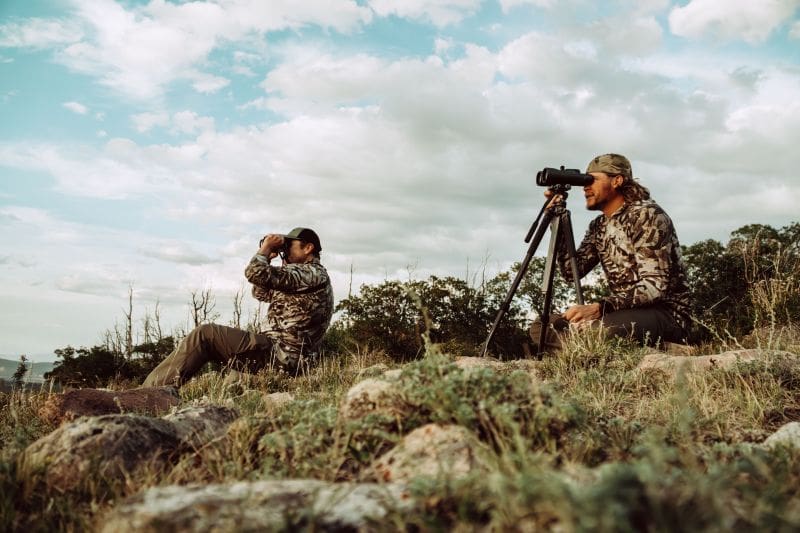
DOUGLAS:I’ve been hunting pronghorn for about 7 years. The attraction is the challenge. They have incredibly good eyesight, and most of the terrain they live in is relatively flat, making it even tougher. You must use all the variation in the terrain to have a chance in most cases.
QUESTION: Many people don’t realize how early pronghorn seasons open. What is your favorite time to hunt?
DOUGLAS: My favorite time to hunt is late September – mid-October when the rut is in full force. Bucks are chasing does around and chasing other bucks away from the does in their midst, so I like to use a decoy because the dominant bucks may present a shot when they see the decoy and approach within range as they attempt to run the intruder off.
QUESTION: Do you apply for tags or go with OTC (over the counter) tags?
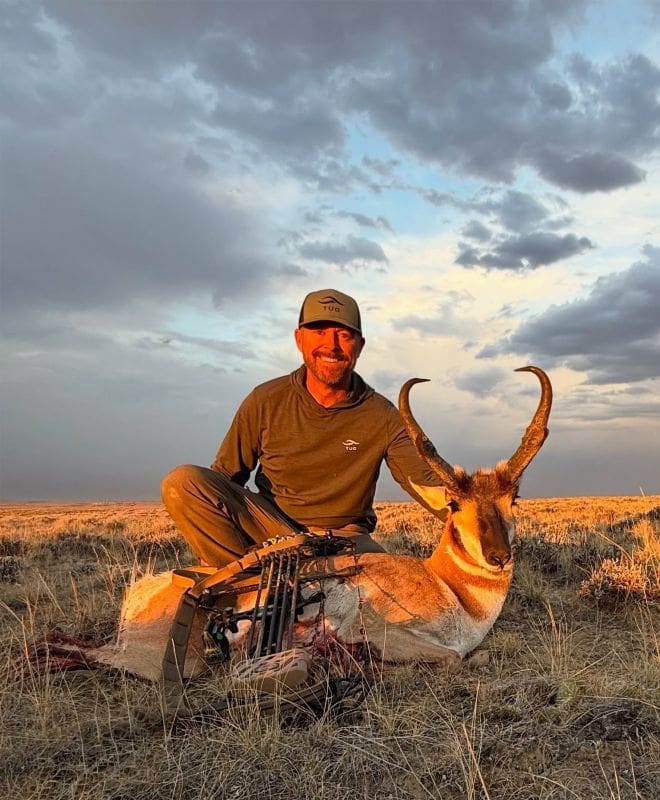
DOUGLAS: I do OTC archery tags, but I have also applied for muzzleloader tags as well. I prefer archery, and while it is significantly more difficult, I enjoy the challenge. Knowing the terrain, wind, where the pronghorn are and how they are acting is critical. Archery hunting pronghorn probably isn’t for everyone – it is more challenging than muzzleloader or rifle hunting. (Note: See section at the end with state-by-state public hunting information.)
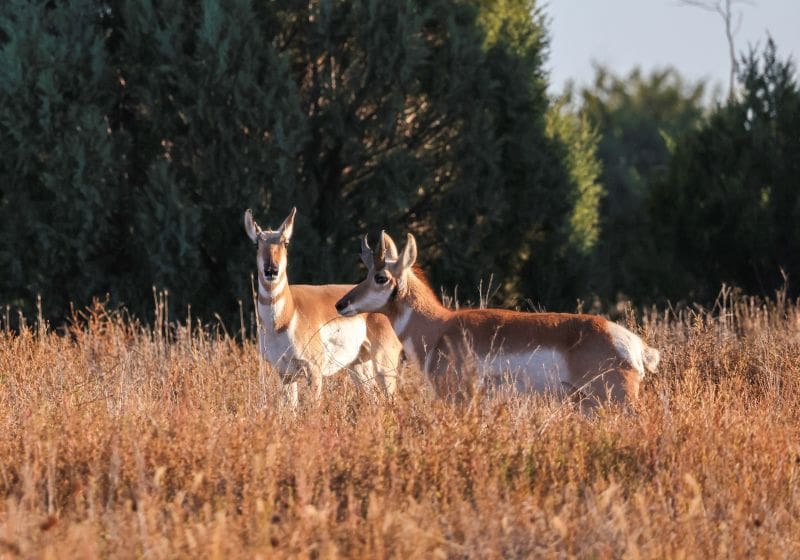
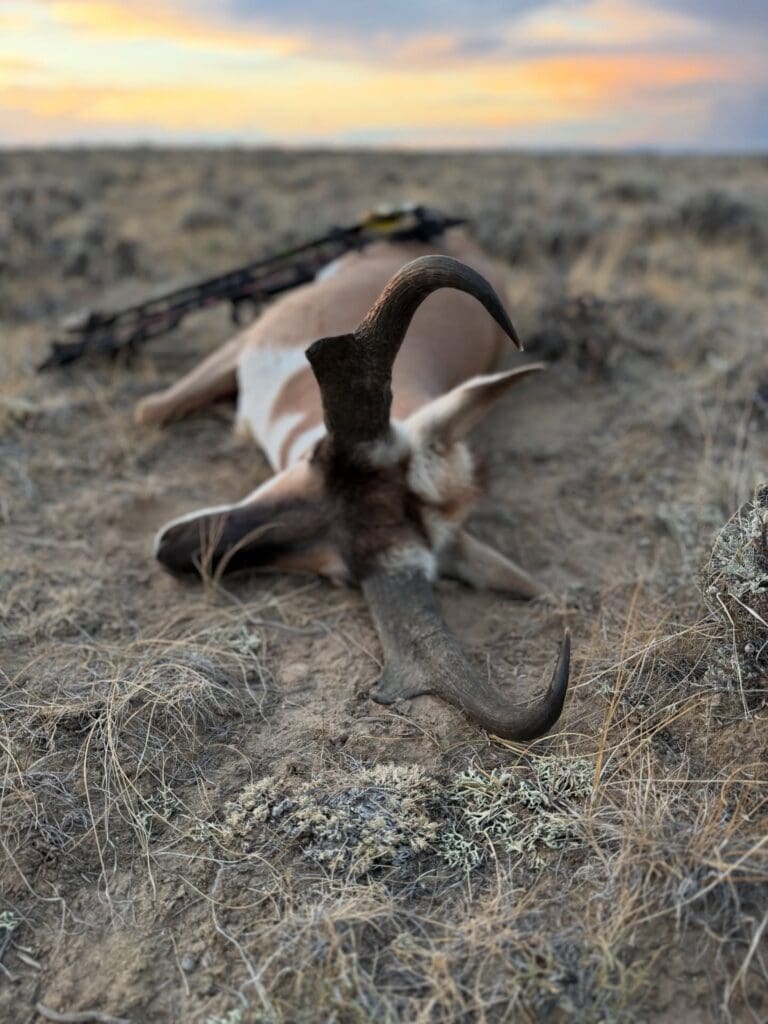
| Photo by Trey Douglas |
QUESTION: What are perfect conditions for hunting pronghorn?
DOUGLAS: A light breeze is good to cover the sound of your footsteps, but wind direction doesn’t matter very much unless there is a very apparent odor that catches their attention. They rely very heavily on their vision, so if you can beat their eyes the chances of getting a shot go way up. Usually, sunny with some clouds is good because if there are any terrain variations, you can use the shadows to your advantage. If it is too hot, say 85 plus, they won’t move as much. The upper 70s to low 80s is about the right temperature for them to be on their feet throughout the day.
QUESTION: How wary are pronghorn compared to whitetail deer?
DOUGLAS: Pronghorns are VERY wary. Most of the time when I stop to glass, they are already looking at me from 400 plus yards away. One important thing to know about pronghorns is that if they sense something is off, they’ll simply leave. Whitetails will hesitate and run a little, then stop, while pronghorns will run and not stop for hundreds of yards. So, when getting into position for a stalk, it is important to stay unseen and unheard.
QUESTION: Spot and stalk hunting can be tough, especially with archery gear. Have you ever hunted from a blind or fixed position over food or water? DOUGLAS: I have only hunted pronghorn spot and stalk style, but if you can find where they are watering and set up a blind, it is a very smart strategy. In Western Nebraska where I hunt, it is very difficult to get permission on private land, and it’s also difficult to find where they are watering.
QUESTION: Assuming it’s warm, what steps do you take to preserve your pronghorn?
DOUGLAS: When it’s hot out you need to have the animal dressed and packed with ice in the chest cavity for the ride home or quartered and in a cooler with ice within an hour of the kill ideally. I also bring a smaller cooler for the cape and head in case it’s a buck worth mounting. This keeps everything cool and allows you to finish the process at home as necessary or get to the taxidermist without getting too warm on the drive.
QUESTION: Hunting freelance style in a new region can be potentially intimidating for hunters, and in this instance hunters who live back east in whitetail country will note the setting is in stark contrast to the woods and fields at home. Is freelancing for pronghorn something easy to adapt to for experienced hunters who have never done it?
DOUGLAS: Freelancing for pronghorn hunting is relatively easy to adapt to for experienced hunters who have never done it, but the main thing is to be in good enough physical condition to hike the distances needed to close the gap. On the upside, pronghorn hunting has the advantage of not being as gear intensive and the weight reduction makes it easier to move around.
QUESTION: As far as gear goes, what are your preferences?
DOUGLAS: For my bow I use a Mathews Lift with a forward and rear stabilizer to help steady on the longer shots if needed. For scouting, I use a 27-60 x 85 spotting scope and carry 10×42 Vortex binoculars. It’s important to see at a great distance with the spotting scope so you can determine if it’s worth taking a closer look at a buck and potentially make a move on him.
Clothing-wise, I love TUO’s Verse camo for this application and my standard kit includes the Clime Pant, Kinetic Merino 150 Hoodie, Aptitude Softshell Vest (more for gear storage than warmth), Kinetic Merino Fingerless Gloves, and Kinetic Merino 150 Balaclava. During pronghorn season it is important to dress for warm temperatures, but also protect yourself from the rugged environment. Besides ideal temperature regulation, I have found Clime pants and softshell vest do a great job keeping me concealed while also offering good protection from the rugged environment in the event I have to belly crawl.
QUESTION: How does pronghorn rate as far as table fare goes?
DOUGLAS: They taste better than many would expect. They are a definite change from whitetail venison since they are much leaner, but they are very good. We typically make summer sausage out of them, which is always a great option.
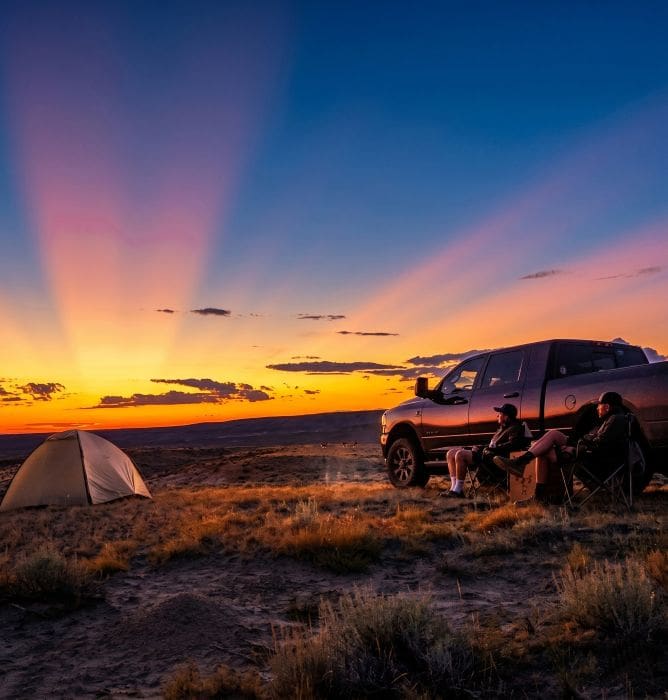
Mapping Public Hunting Access Across Pronghorn Range
The real challenge for modern freelancers lies in mapping out where to legally put boots on the ground. Because these wide-ranging icons thrive across a diverse landscape of federal acreage, state trust land, and sprawling private ranches, public hunting accessibility shifts dramatically depending on geography. Understanding the regional breakdown of public land availability is the definitive factor between a wide-open western adventure and a logistical dead end.
The Intermountain West
For hunters prioritizing expansive acreage and true self-guided freedom, the western portion of the pronghorn range stands as the premier destination. Vast expanses of federally managed land offer unchecked access across prime sagebrush flats.
Wyoming: The absolute epicenter of pronghorn hunting. The western half of the state features massive, contiguous blocks of Bureau of Land Management (BLM) land, giving hunters miles of room to roam without hitting private boundaries.
Montana: Public access remains highly available, particularly across the eastern prairies where pronghorn concentrations peak. Montana’s robust hunter-access programs on private acreage further supplement the extensive federal holdings.
Idaho and Nevada: Both states boast immense percentages of public BLM and U.S. Forest Service lands within core pronghorn habitat, though drawing the required tag remains highly competitive.
The Central Plains and Southwest
In the mid-tier regions, public land exists but demands meticulous planning, digital mapping tools, and a sharp eye for checkerboard ownership patterns. Colorado: The northwestern quadrant provides excellent pronghorn numbers on solid blocks of public ground. Conversely, the eastern plains are heavily privatized, leaving limited, high-pressure public parcels.
New Mexico: Massive tracts of BLM land hold exceptional trophy potential, but the eastern side of the state transitions quickly into private holdings. Navigating the restrictive non-resident draw system adds an extra layer of difficulty.
The Southern Plains
On the southern and southeastern fringes of the pronghorn range, public hunting land becomes virtually nonexistent, requiring a complete pivot in strategy.
Texas: While the Panhandle and Trans-Pecos regions host healthy herds, nearly 97 percent of the state is privately owned. Public options are exceptionally scarce, meaning hunting is dictated by private landowner permits, established leases, or contracted outfitters. Oklahoma: Confined primarily to the far western reaches of the Panhandle, pronghorn habitat here is overwhelmingly dominated by private ranches, with opportunities restricted to tightly regulated, limited controlled draw hunts.
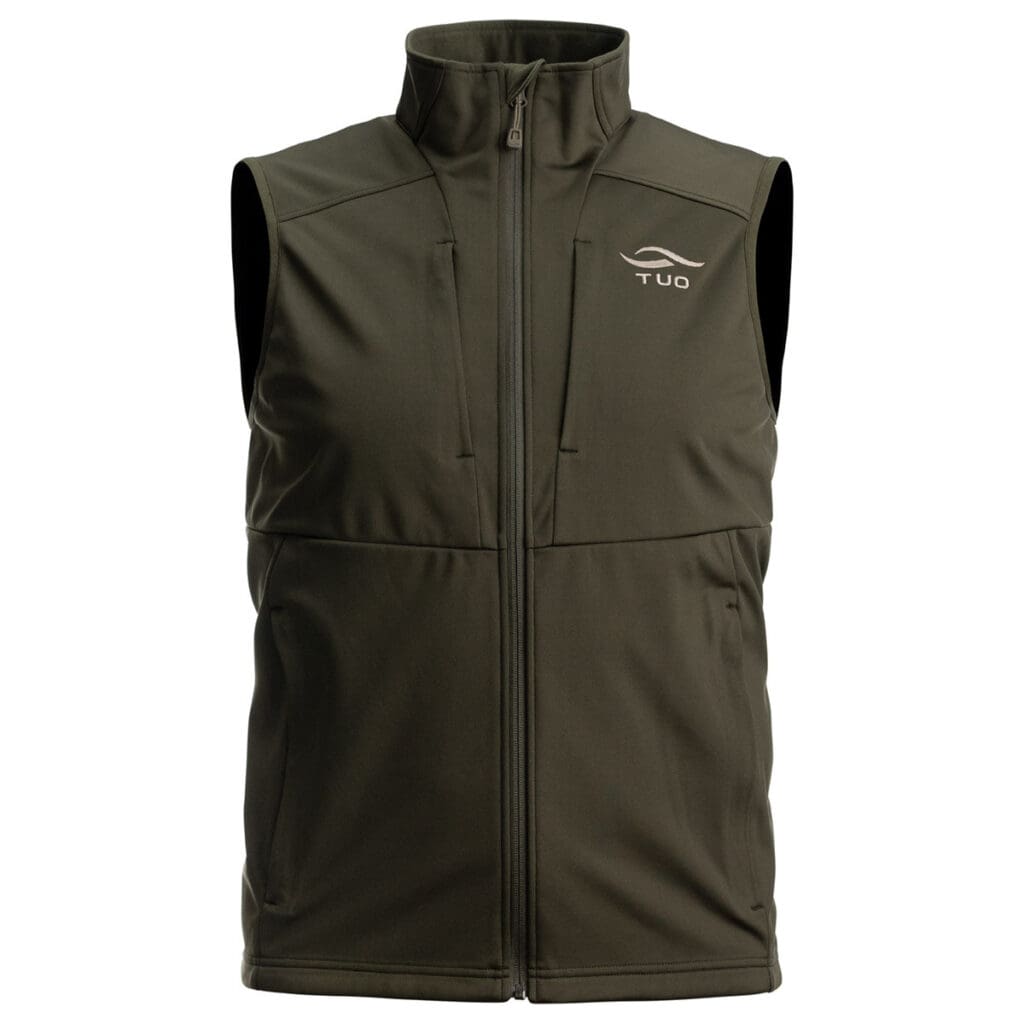
TUO Aptitude Softshell Vest FEATURES:
- Durable and quiet 94.5% polyester, 5.5% spandex softshell outer fabric
- Fleece grid lining for warmth and comfort
- AeroGuard™ Windproof membrane protects against harsh wind
- Polygiene StayFresh™ helps reduce odor from bacteria and OdorCrunch™ captures and inhibits odors
- DWR treatment to help shed off moisture and stains
- 4-way stretch throughout for mobility, fit, and function
- 4 zippered pockets (2 waist, 2 chest) for secure storage
MSRP $169.99
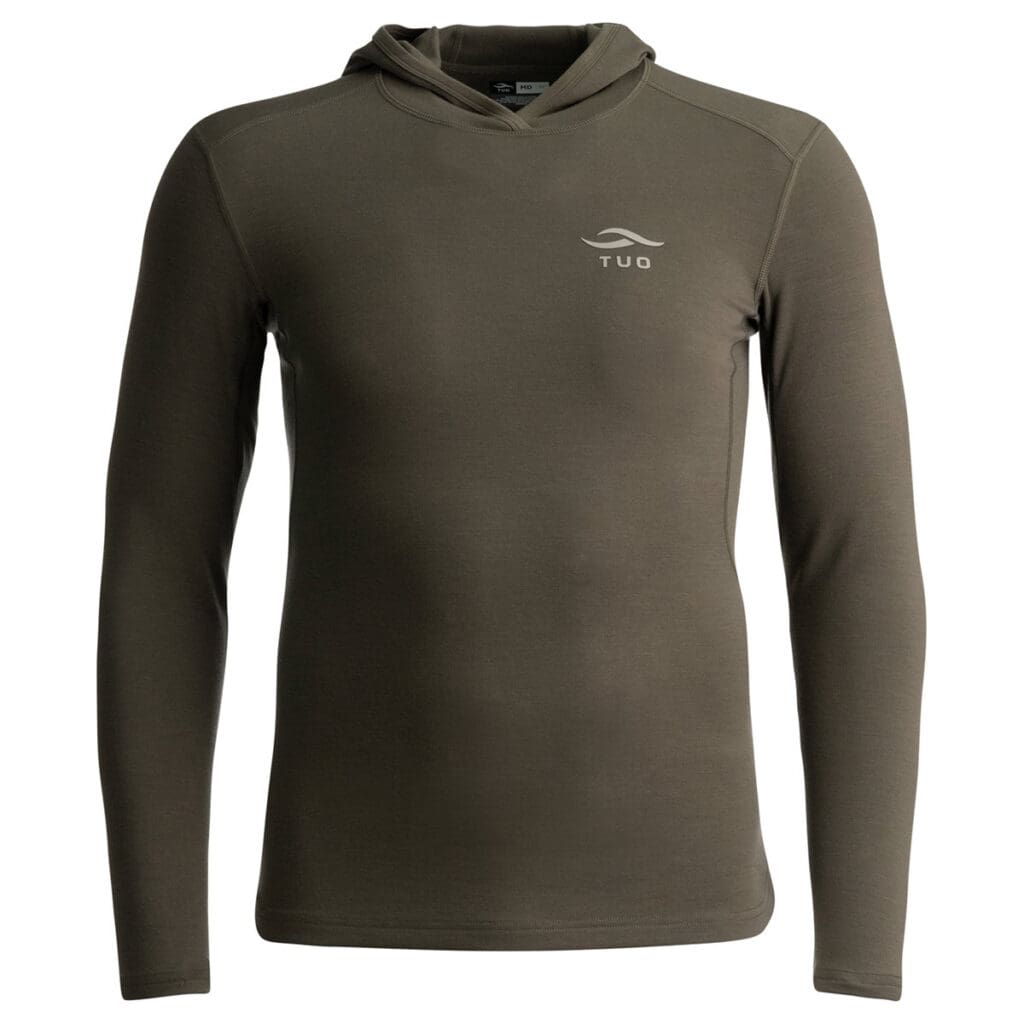
TUO Kinetic Merino 150 Hoodie FEATURES:
- 150g 86% 18.5 micron merino wool, 12% core-spun nylon, 2% spandex
- Merino wool spun around a nylon core increases durability and elasticity
- Naturally moisture wicking & antimicrobial
- Flatlock seams for next-to-skin comfort
- 3-piece hood protects against the sun and adds warmth when layering
MSRP $109.99
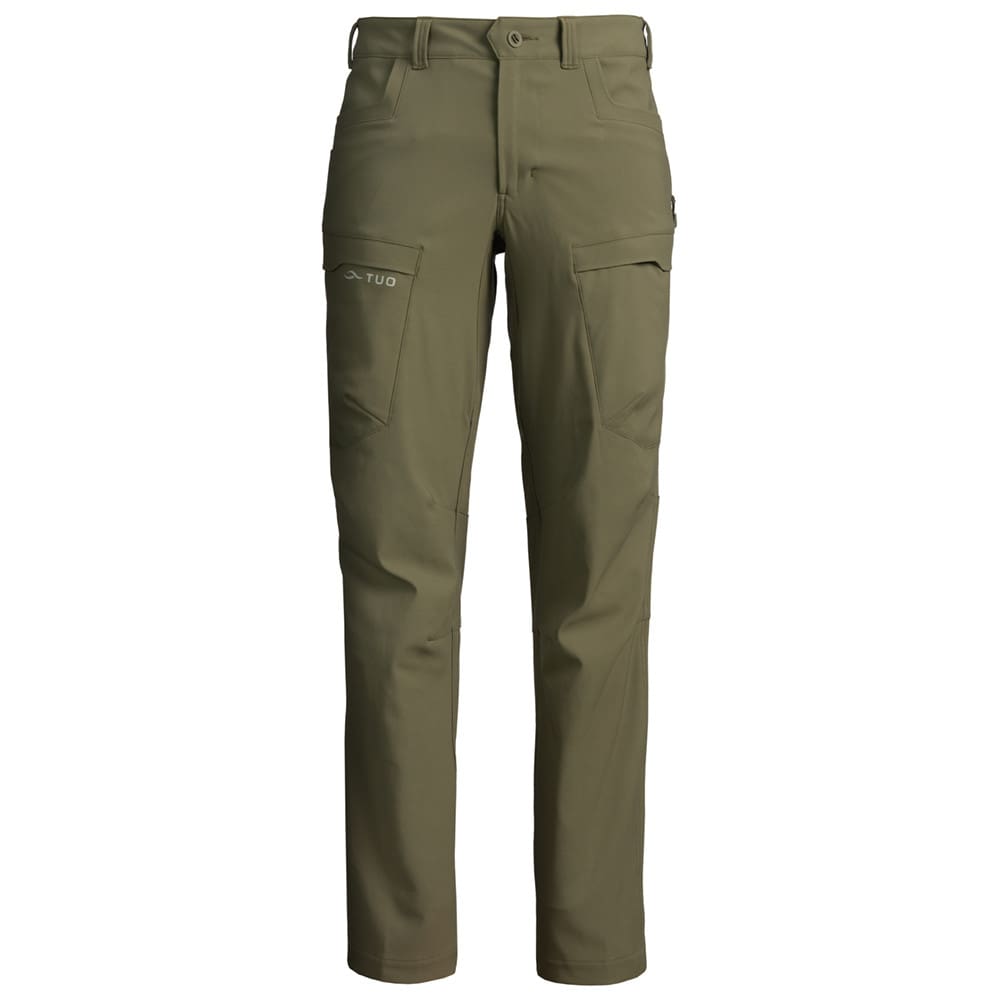
- 93% polyester, 7% spandex material
- 278 gram fabric weight
- 4-way stretch fabric for increased mobility and comfort in any terrain
- Polygiene StayFresh™ helps reduce odor from bacteria and OdorCrunch™ captures and inhibits odors
- Super DWR treatment for water and stain resistance
- Articulated knees and inner thigh gusset for improved fit and mobility
- Side seam vent zips with mesh lining for temperature regulation
- Two waist pockets, two zippered cargo pockets, two zippered back pockets, one right-side knife pocket
- 34” inseam
MSRP $149.99